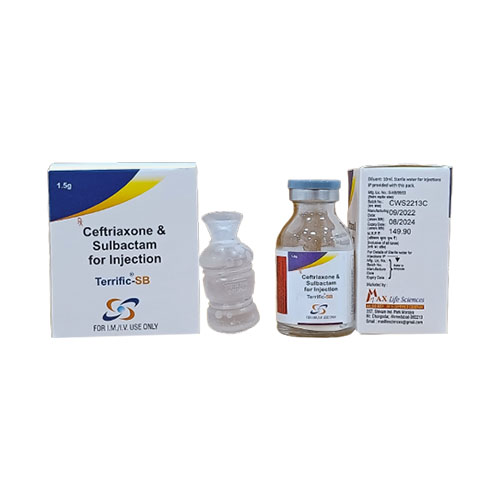
Ceftriaxone 1 mg and Sulbactam 500 mg Injection—It is primarily prescribed to treat and manage bacterial infections and belongs to the antibiotic group of medications. The injection is composed of two potent medications, such as Ceftriaxone and Sulbactam. This medication is also given before a certain type of surgery to avoid the risk of bacterial infection. Bacterial infections are caused by the multiplication and replication of various harmful bacteria, leading to infections in different parts of the body.
These bacteria release a certain type of harmful toxin, resulting in the infection. The injection is used to treat a wide range of bacterial infections, such as respiratory tract infections, pneumonia, skin and skin tissue infections, intra-abdominal infections, urinary tract infections, meningitis, and surgical prophylaxis. Ceftriaxone is a third-generation cephalosporin antibiotic that works effectively against both gram-positive and gram-negative bacteria. Whereas Sulbactam is a beta-lactamase inhibitor, it enhances the action of Ceftriaxone by preventing bacterial resistance caused by beta-lactamase enzymes.
Max Life Science is an established and reputable manufacturer of Ceftriaxone and Sulbactam Injection under the brand name TERREFIC-SB. Associate with MaxLife Sciences for PCD Pharma Franchise Business Opportunities.
What is the Mode of Action of Ceftriaxone and Sulbactam Injection?
Ceftriaxone and Sulbactam Injection works by eliminating the bacterial infection in various parts of the body. The injection is usually administered intravenously or intramuscularly under medical supervision for quick and effective results. The working mechanism of Ceftriaxone and Sulbactam Injection has been mentioned as follows:
Ceftriaxone—It belongs to the third-generation Cephalosporin, which works by inhibiting the process of bacterial cell wall synthesis. It binds to the specific protein, leading to the formation of an unstable and defective cell wall, hence resulting in rupture of the protective outer covering (cell wall). This cell wall is an essential covering for the bacteria’s survival.
Sulbactam—It is a beta-lactamase inhibitor group of medicines. It is a combination drug, which is not an antibiotic on its own but complements the action of the antibiotic to enhance its effectiveness. It irreversibly inhibits beta-lactamase enzymes produced by resistant bacteria and enhances the activity of Ceftriaxone against bacteria.
Together, they provide a broad spectrum of antibacterial activity and are effective against both gram-positive and gram-negative bacteria.
Medical Benefits of Ceftriaxone and Sulbactam Injection
A list of medical benefits of Ceftriaxone and Sulbactam Injection has been introduced as follows:
Broad-Spectrum Antibacterial Coverage: Effectively targets a wide range of gram-positive and gram-negative bacteria, making it suitable for treating multiple types of infections.
Enhanced Antibiotic Effectiveness: Sulbactam inhibits beta-lactamase enzymes, which prevent bacteria from becoming resistant to Ceftriaxone, ensuring the antibiotic remains potent and effective.
Rapid Infection Control: The combination quickly reduces bacterial load, helping to control severe and acute infections in a shorter period of time.
Supports Post-Surgical Recovery: Frequently used as a prophylactic antibiotic to prevent surgical site infections and aid in faster postoperative recovery.
Side Effects of Using Ceftriaxone and Sulbactam Injection
While effective, this medication may cause some side effects. It is important to be aware of them. This medication is generally well-tolerated but can cause mild to moderate reactions. A list of them has been mentioned as follows:
- Increased white blood cell count
- Low blood platelets
- Rash
- Diarrhea
- Increased liver enzymes
- Injection site reactions
- Elevated liver enzymes
- Nausea
- Vomiting
- Black stools
Safety and Precautions to be followed while Using Ceftriaxone and Sulbactam Injection
While taking this injection, certain safety measures must be followed. These guidelines help patients avoid harmful drug interactions, allergic reactions, incorrect dosages, and misuse.
- Avoid taking it if you’re pregnant or breastfeeding. Consult a doctor before using it.
- Disclose your complete medical history, especially related to liver, kidney, gallbladder, or gastrointestinal diseases.
- Avoid taking this combination injection if you’re allergic to cephalosporins, penicillins, or other beta-lactam antibiotics.
- The dosage and duration of therapy should be used as directed by the doctor and under their consultation.
Frequently Asked Questions (FAQs)
Q1. How is this injection administered?
It is administered by a healthcare professional through intravenous (IV) or intramuscular (IM) injection.
Q2. Can I take this injection at home?
No, it should be given only under medical supervision.
Q3. Are there any allergic reactions to watch out for?
Yes, a rash, itching, or difficulty in breathing may indicate an allergic reaction—consult a doctor immediately.
Q4. Can pregnant or breastfeeding women use it?
Only when prescribed by a doctor after assessing the benefits and risks.
Q5. What should I do if I miss a dose?
Inform your healthcare provider; do not double the next dose.
Q6. Does it interact with other medicines?
Yes, inform your doctor about all current medications, especially other antibiotics or anticoagulants.
Q7. How long does the treatment last?
The duration depends on the type and severity of the infection, as decided by your doctor.